

Clinical Presentation of Vena Cava Syndrome in the Oncologic Intensive Care Unit: A Case Series
DOI:
https://doi.org/10.14740/cem3Keywords:
Vena cava syndrome, Oncologic emergencies, Intensive care, Thrombosis, Lung cancer, Non-Hodgkin lymphoma, Hospital mortalityAbstract
Background: Vena cava syndrome (VCS), particularly superior vena cava syndrome (SVCS), is caused by obstruction of venous return to the right atrium and may represent an oncologic emergency depending on symptom severity, most often due to malignant tumors compressing or invading the vena cava. SVCS is prevalent among patients in oncologic intensive care unit (ICU), with significant clinical implications and high mortality.
Methods: We conducted a descriptive case series including 19 patients diagnosed clinically and radiologically with VCS, treated in the Oncologic ICU of the National Cancer Institute in Bogota between 2022 and 2025. We analyzed clinical, oncologic, imaging, and outcome variables, including Yu severity classification, Kishi intervention score, thrombotic events, critical complications, anticoagulant use, and mortality.
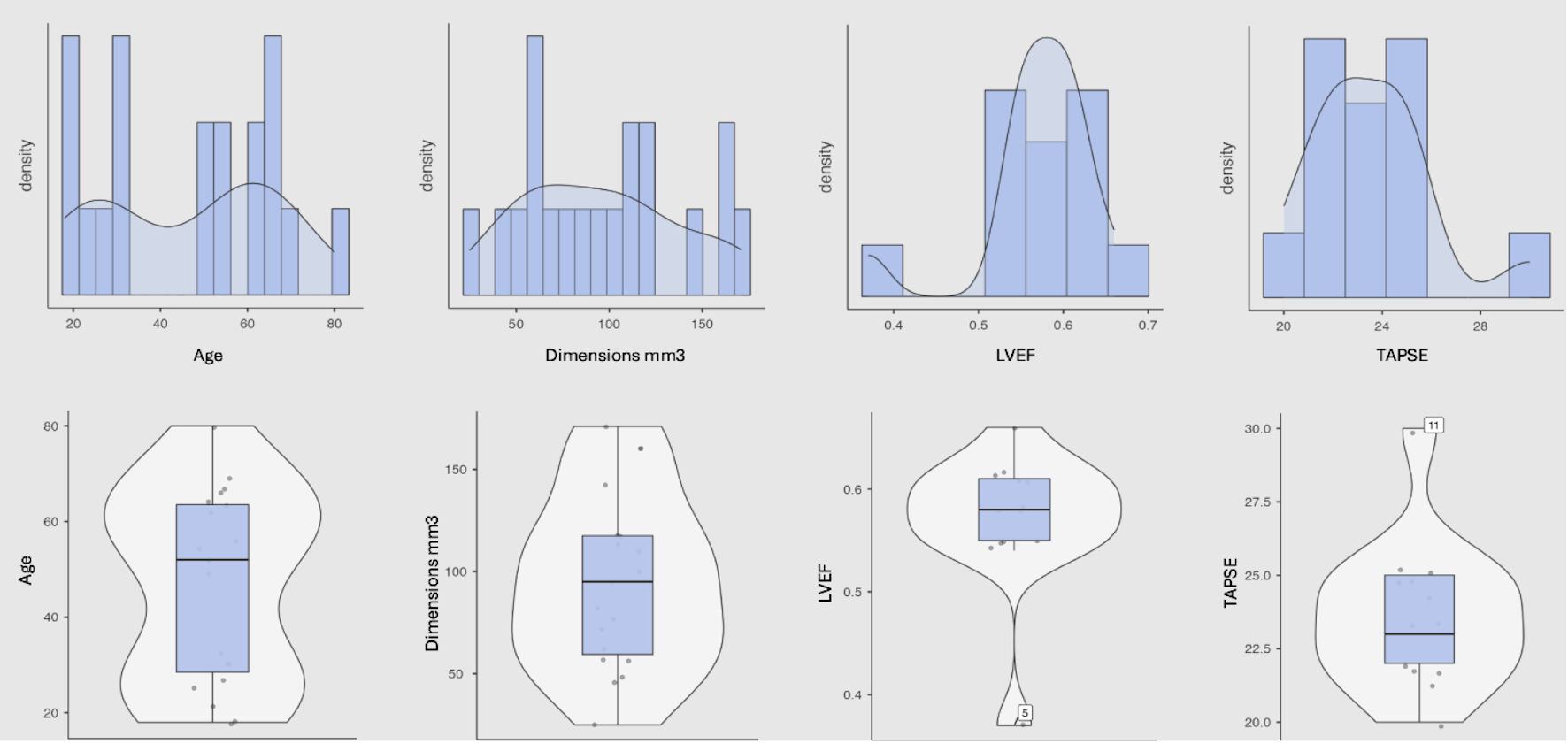
Results: The mean age was 46.5 years, and 57.9% were male. Solid tumors predominated (57.9%), with non-Hodgkin lymphoma as the most common cause (36.8%), followed by lung carcinoma (15.8%). Fourteen patients (73.7%) had SVCS, and five (26.3%) had inferior vena cava syndrome (IVCS). Respiratory symptoms, mainly dyspnea, were present in 89.5% of the patients. Collateral circulation was observed in 84.2% of patients, predominantly via the azygos–hemiazygos system. According to Yu classification, 12 patients (63.2%) were grade 4, whereas seven (36.8%) were distributed across grades 1–3, and 13 patients (68.4%) had a Kishi score > 4. Thrombosis occurred in 52.6%, with 63.6% of these patients’ receiving anticoagulation. Ventilatory failure developed in 79.8%, and 36.8% experienced acute kidney injury (mostly Kidney Disease: Improving Global Outcomes (KDIGO) stage 3). Overall mortality was 57.9%.
Conclusions: In this ICU cohort, malignant VCS—predominantly SVCS—was associated with frequent organ dysfunction and high in-hospital mortality. Early identification, clinical stratification, and targeted intervention are essential to reduce mortality. The findings underscore the need for specific management protocols in oncologic ICUs to improve outcomes.
Published
Issue
Section
License
Copyright (c) 2026 The authors

This work is licensed under a Creative Commons Attribution-NonCommercial 4.0 International License.